

C'est formidable de voir une personne passer d'un emploi malheureux à un emploi passionnant et épanouissant.
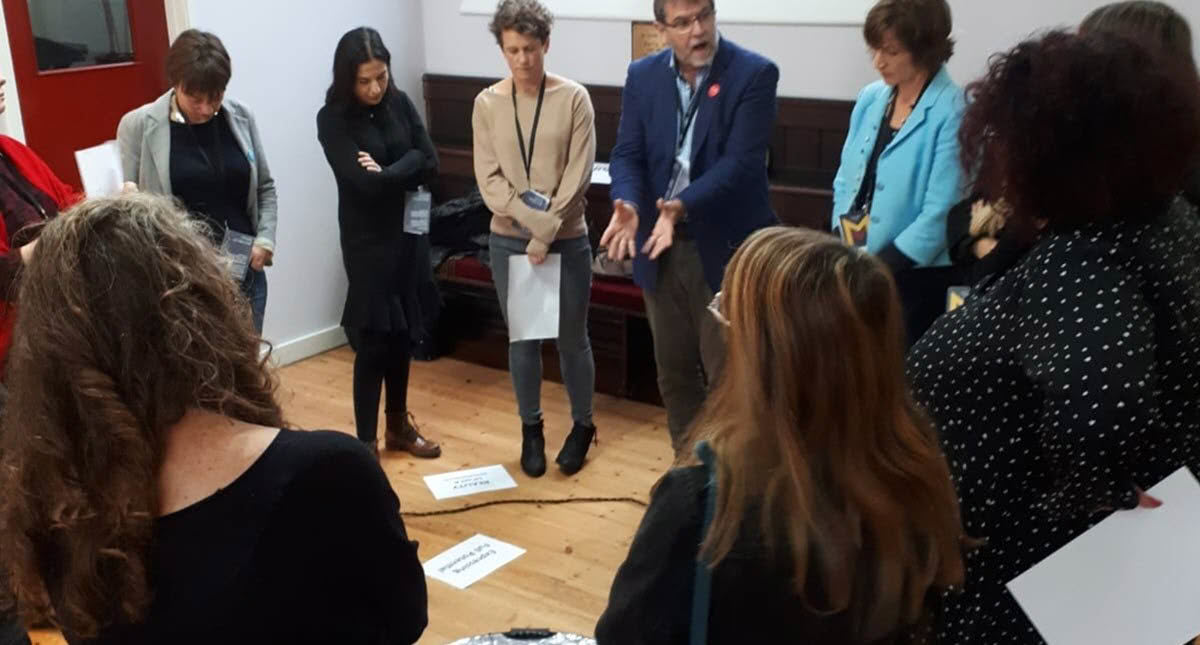
Jane participait à un atelier que j'animais sur la Carte du sens®. Elle était venue avec un objectif précis : décider de rester ou non à son poste. Elle n'a pas pris sa décision à ce moment-là, mais lorsque je l'ai rencontrée, quelques mois plus tard, elle était rayonnante. Que s'est-il passé ?
“J'ai réalisé que les choses que je n'aimais pas dans mon travail étaient des choses que je pouvais influencer. J'ai donc fait quelque chose pour y remédier. J'ai renoué avec ce qui m'avait inspiré à l'origine dans ma profession ; je suis sortie de l'organisation et j'ai partagé cela avec d'autres, en leur disant comment je pouvais les aider. J'ai rencontré un grand nombre de personnes fantastiques et j'ai maintenant des collègues que je trouve passionnants - et des déjeuners qui m'inspirent. Il m'a fallu du courage et une évaluation honnête de moi-même, mais les gens ne me reconnaissent plus aujourd'hui. Je ne me reconnais plus maintenant !”
Ce qui a fait la différence, c'est qu'elle a trouvé dans la Carte du sens® un moyen simple de comprendre pourquoi elle était malheureuse, ainsi qu'un cadre lui permettant de déterminer ce qu'elle pouvait faire pour redonner du sens à son travail.
Chaque fois que j'anime un atelier sur le travail utile, les participants vivent des expériences similaires à celle de Jane. Ils comprennent les raisons pour lesquelles ils se sentent insatisfaits au travail et trouvent des moyens d'y remédier. Cette vision s'applique à toutes les étapes du cycle de vie des employés, aux pratiques quotidiennes des RH en matière d'embauche, de développement et de rétention des bons travailleurs.
Dans cet article, je passe en revue les étapes du cycle de vie de l'employé et montre comment une compréhension du travail utile peut apporter une valeur ajoutée aux individus dans les organisations ainsi qu'aux praticiens des ressources humaines et du développement organisationnel.
La Carte du Sens®, œuvre du Dr Marjolein Lips-Wiersma, rassemble dans un cadre simple les moteurs intrinsèques qui, ensemble, donnent un sens au travail pour les êtres humains, tant au niveau individuel qu'organisationnel.
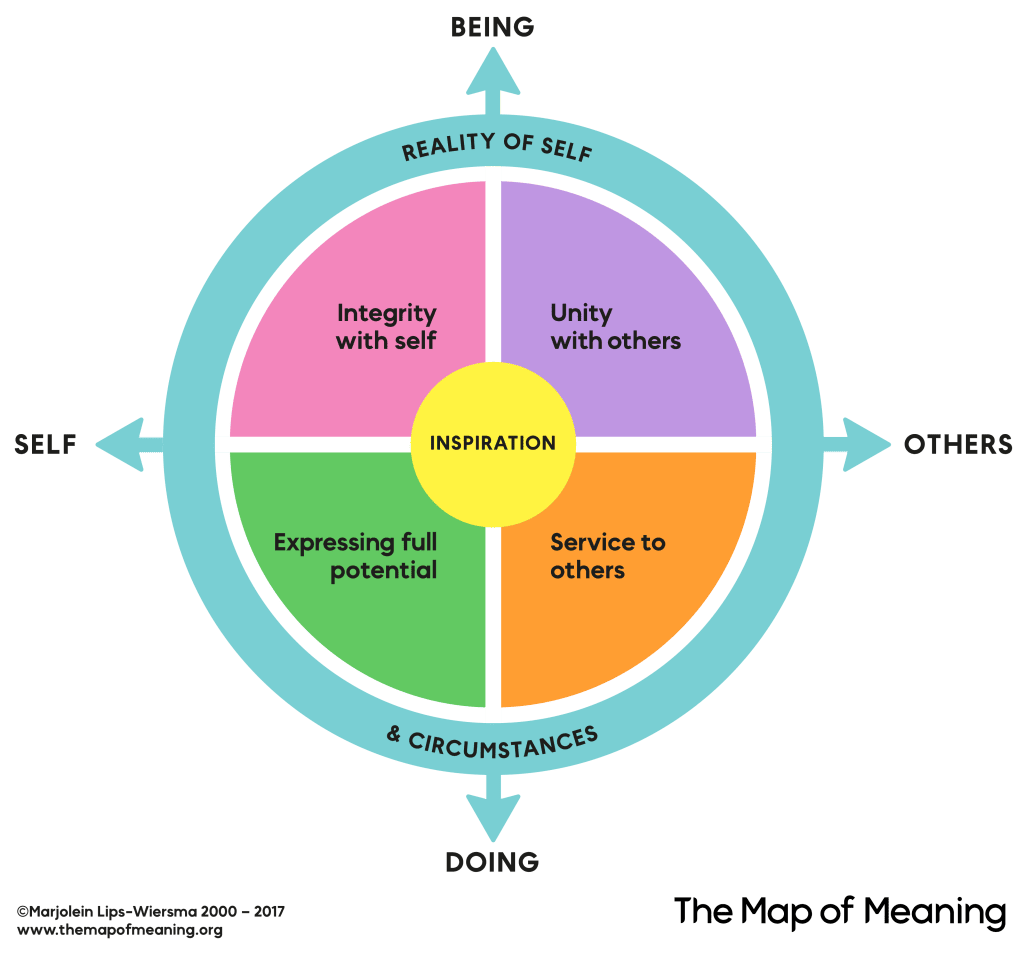
Lorsque les gens vont travailler, ils veulent que leur travail vaille la peine qu'ils y consacrent du temps et des efforts. Nous aspirons tous à un travail qui nous procure : un sentiment de connexion avec les personnes avec lesquelles nous travaillons, une chance d'exprimer tout notre potentiel, un environnement dans lequel nous pouvons être authentiques, et un travail qui fait une différence positive pour les autres et la planète. Nous voulons que notre travail soit l'expression de ce qui nous inspire et qu'il produise des résultats dans le monde réel. Et nous avons besoin que tous ces facteurs soient présents dans notre travail pour nous sentir épanouis. Nous sommes conscients de la perte de sens, car lorsqu'elle se produit, nous perdons également notre énergie, notre concentration et notre passion. Un travail qui a du sens nous concerne en tant qu'individus, depuis le moment où nous considérons une organisation comme un employeur potentiel jusqu'au moment où nous la quittons, et il concerne donc également les organisations dans lesquelles nous travaillons.
Attraction
Les gens veulent travailler pour des organisations qui leur permettent de satisfaire leur besoin de travail utile, et c'est donc ce qu'ils recherchent, consciemment ou non, lorsqu'ils commencent à chercher un emploi.
Dans une enquête rapide sur les entreprises américaines et néo-zélandaises élues meilleurs employeurs, les éléments d'un travail utile sont mis en avant comme motifs de satisfaction.
Service aux autres - Les employés ont la possibilité de voir les personnes qu'ils aident tous les jours.“
Unité avec les autres -Lorsque vous venez ici, vous rejoignez une famille.“
Intégrité avec soi-même - “Je peux être moi-même ici.”
Exprimer son plein potentiel -” Lorsque j'ai été embauché, j'ai eu la liberté de faire de mon travail ce que je voulais qu'il soit et de contribuer de la manière dont je peux le faire le mieux”
La Map of Meaning® fournit un cadre clair pour évaluer la manière dont une organisation offre des possibilités de travail enrichissant, et donc son attrait pour les employés potentiels.
Il y a quelques années, la société de télécommunications néo-zélandaise Chorus a été désignée comme l'une des trois organisations élues meilleur employeur dans le cadre d'une enquête d'Aon Hewitt en Nouvelle-Zélande. Le directeur général des ressources humaines de l'époque a souligné l'importance d'être un employeur recherché : “Si vous travaillez dans un endroit qui est reconnu à l'extérieur comme un endroit où il fait bon travailler, cela renforce vraiment l'attachement des gens à cet endroit. Les gens sont assez intelligents lorsqu'ils cherchent un nouvel emploi et se renseignent d'abord sur l'employeur potentiel. Les gens votent avec leurs pieds”.”
Recrutement et sélection.
Le défi du recrutement consiste à trouver la bonne personne.
Bien sûr, il existe de nombreuses façons de procéder, mais la Carte du sens® aide les gens à identifier non seulement les éléments individuels qui comptent pour eux, mais aussi l'ensemble des éléments importants, afin qu'ils puissent prendre des décisions plus complètes.
Alan a appris au fil des ans qu'il voulait travailler dans une organisation inspirante. Travailler avec la Carte du sens® et poser la question ‘qu'est-ce qui n'est pas négociable dans votre travail ?’ l'a aidé à voir qu'il devait aussi aller au-delà de la rhétorique - et découvrir si la mission et la vision faisaient réellement partie de l'objectif quotidien des organisations avec lesquelles il cherchait à travailler. Cela l'a amené à être plus perspicace lors de ses entretiens et à choisir finalement une entreprise où l'écart entre les valeurs adoptées et les valeurs vécues pouvait être ouvertement exploré. Cela lui a évité de rejoindre et de perturber une organisation qui ne faisait pas preuve d'une telle ouverture.
Le fait de travailler sur le besoin d'un travail utile au stade de l'entretien d'embauche peut permettre d'établir une relation non seulement pour le déploiement réussi des compétences, mais aussi pour l'épanouissement de la personne dans son ensemble, avec tout ce qu'elle peut offrir à la fois à elle-même et à l'organisation.
Nomination.
L'utilisation de la carte du sens peut permettre d'établir un contrat très clair entre l'organisation et le nouvel employé, sur la base d'une reconnaissance claire de ce qui est important pour les deux parties et de la capacité de chacune d'entre elles à fournir ces éléments.
Une organisation employant un grand nombre de bénévoles a étudié la manière dont la Carte du sens® peut constituer un moyen de clarifier les motivations initiales parfois romantiques des bénévoles, en les confrontant à la réalité du travail au sein de l'organisation. Elle y a vu un moyen d'accroître la satisfaction au travail en clarifiant plus profondément les attentes, puis en s'en servant comme base pour les futurs entretiens d'évaluation des performances.
Induction.
C'est le moment d'aligner les objectifs individuels sur les objectifs de l'organisation et d'ancrer les gens de manière réaliste dans ce qui les attend. Il s'agit également de leur rappeler qu'ils sont capables de créer et de conserver un travail qui a du sens.
Une personne nommée, qui avait travaillé avec la Carte du sens® pendant plusieurs années, a remarqué à quel point elle se sentait pleine de ressources dans son nouveau poste. “Je sais que ce n'est pas parfait et que cela ne le sera jamais. Mais j'ai déjà été en mesure de créer un soutien par les pairs, d'explorer les moyens de continuer à me remettre en question, et je suis en train de réfléchir à la manière dont je peux le mieux mettre mes talents à contribution ici”. Le fait de pouvoir prendre le contrôle de la création d'un travail significatif l'a responsabilisée et a renforcé son engagement et son ingéniosité dans cette nouvelle situation.
Formation et développement de carrière
Une fois qu'une personne est installée dans son emploi, il s'agit non seulement de faire le travail pour lequel elle est employée, mais aussi d'accroître ses capacités, de la doter de compétences et de développer son potentiel.
L'établissement d'un lien entre la formation et une capacité accrue à conserver un sens à leur travail présente un intérêt réel pour les participants, ainsi que pour l'organisation. Par exemple, la perte de sens peut résulter du fait que le personnel crée une initiative qui est ensuite bloquée d'une manière ou d'une autre par les politiques, les procédures ou les personnalités de l'organisation. Afin de combler le fossé entre l'inspiration et la réalité de soi et des circonstances, les gens ont souvent besoin de développer des compétences en matière de communication et de leadership. Le fait d'offrir ces compétences dans le contexte de la responsabilité d'accroître la signification de leur travail a conduit le personnel à créer des initiatives ascendantes qui ont ouvert de nouvelles opportunités pour l'entreprise et ont inspiré la direction générale.
Évaluation des performances
Si le contrat initial inclut les éléments d'un travail utile, comme nous le voyons dans l'exemple des volontaires, l'évaluation des performances peut devenir une conversation beaucoup plus approfondie sur la façon dont le travail se déroule. Les personnes peuvent se préparer en examinant les domaines dans lesquels le travail a été utile au cours de la période, et ceux dans lesquels il ne l'a pas été, ainsi que les raisons de cet échec.
Cela laisse plus de place aux conversations honnêtes et peut donner de la vie à ce qui, autrement, peut sembler n'être qu'une exigence organisationnelle de plus, en reconnaissant que le sens et son absence sont vitaux non seulement pour l'individu, mais aussi pour l'organisation.
Équilibre vie-travail
Les personnes qui comprennent clairement ce qui donne un sens à leur travail peuvent constater les déséquilibres dans leur travail et dans leur vie, et décider ensuite de ce qu'il convient de faire. Par exemple, la nécessité de prendre un peu plus de temps pour elles-mêmes - souvent pour répondre aux exigences de la famille et du travail - parce qu'elles comprennent clairement que ce temps pour soi est une partie essentielle de leur capacité à contribuer et à servir les autres. L'avantage pour l'organisation est que les personnes reviennent avec une énergie nouvelle, en se sentant responsabilisées et pleines de ressources.
Rétention, récompenses et reconnaissance
Un travail utile est sa propre récompense. Il est moins nécessaire de se concentrer sur les récompenses monétaires lorsque le travail des personnes a un sens, à condition qu'il ne soit pas exploité et que les personnes soient bien traitées. Une fois ce principe bien compris, d'autres moyens de récompenser et de reconnaître les personnes peuvent être trouvés, souvent par les personnes elles-mêmes ; par exemple, du temps pour une formation supplémentaire, la possibilité d'observer un collègue compétent, d'être détaché à un rôle plus intéressant, d'être soutenu dans le développement d'une nouvelle initiative.
Transition
La transition peut marquer une période où les tensions entre l'individu et l'organisation sont à leur comble. Comment reconnaître au mieux ces tensions et les rendre constructives, sans nier ou minimiser les perturbations et les défis potentiels ?
Si la personne a une compréhension suffisante du travail utile, bien qu'elle ne sache pas exactement quelles sont les étapes à venir, elle a confiance en sa capacité à prendre des décisions judicieuses, quelles que soient les circonstances dans lesquelles elle se trouve.
C'est le cas de Jane, à qui j'ai reparlé alors qu'elle risquait d'être licenciée. Je lui ai demandé comment elle s'en sortait et elle m'a répondu : “Je suis anxieuse, bien sûr. Mais je me sens aussi pleine de ressources. L'expérience que j'ai acquise au cours des dix-huit derniers mois me fait prendre conscience que je peux créer un travail satisfaisant, probablement dans toute une série de situations différentes, et je me sens donc assez résiliente”.”
Lorsque des personnes qui ont une idée claire du sens de leur travail décident de partir, cela peut se faire avec dignité et bonne volonté de part et d'autre. Une femme participant à une formation a réalisé que sa famille était la chose la plus importante pour elle et a démissionné de son poste de direction. Mais elle était tellement appréciée par l'organisation qui l'employait qu'elle lui a proposé un contrat de trois jours par semaine qui lui a permis de faire le travail qu'elle aime, tout en ayant l'énergie qu'elle souhaite pour sa famille.
Un travail qui a du sens est d'une importance vitale pour chaque employé et l'organisation a des retombées directes en y prêtant attention. En effet, les personnes qui trouvent que leur travail a du sens sont plus heureuses, en meilleure santé et plus susceptibles de rester à leur poste. Ils sont plus susceptibles de défendre les intérêts de l'organisation et d'attirer de futurs employés talentueux, ce qui nous ramène à la première étape du cycle de vie de l'employé.
Pour plus d'informations sur la Carte du sens®, consultez le site :






 FR
FR  EN
EN  NL
NL